Lalita Sahasranama
The Thousand Divine Names of Goddess Lalita Mahatripurasundari
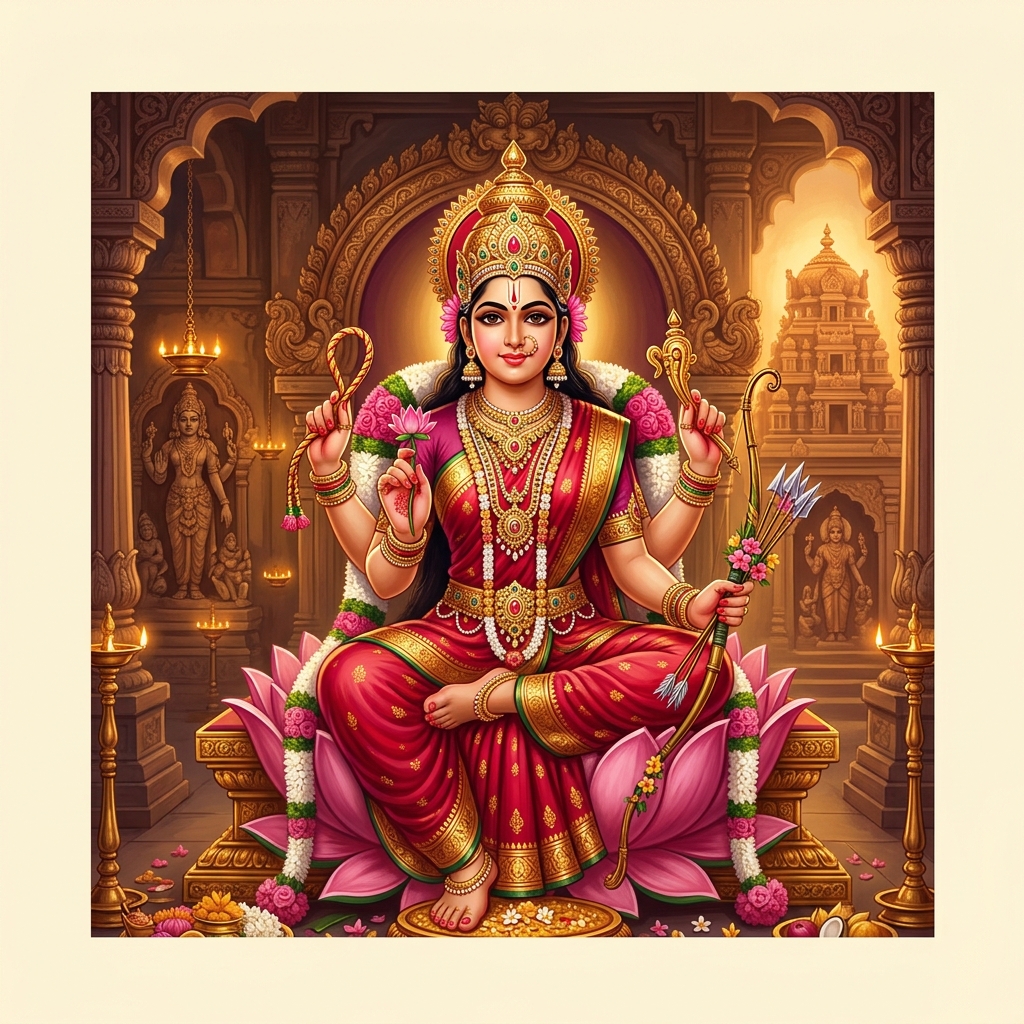
Revealed in the sacred Brahmanda Purana, Lalita Sahasranama contains one thousand names describing the beauty, compassion, wisdom, and supreme power of the Divine Mother. It is one of the most revered hymns in the Shakta tradition and is cherished by devotees seeking spiritual growth, inner peace, and divine grace.
About Lalita Sahasranama
In the Lalitopakhyana section of the Brahmanda Purana, Sage Hayagriva reveals the sacred thousand names of Goddess Lalita to Sage Agastya.
Each name describes an aspect of the Divine Mother—from her cosmic power and supreme wisdom to her compassion and beauty.
For centuries, devotees have chanted Lalita Sahasranama for spiritual elevation, devotion, protection, and self-transformation.
Learn with Shruti Sadhana
Everything you need for a complete learning journey.
Why Devotees Chant Lalita Sahasranama
- Deepens devotion and connection with the Divine Mother
- Cultivates inner peace, mental clarity and emotional balance
- Encourages spiritual growth and self-transformation
- Strengthens focus during meditation and daily practice
- Part of a timeless spiritual tradition followed for generations
Historical & Scriptural Context
Brahmanda Purana
Origin
Lalitopakhyana
Dialogue between Hayagriva and Agastya
Hayagriva teaches Agastya
Reveals the thousand names
Traditional Transmission
Passed down through Sri Vidya lineage
Modern Devotional Practice
Chanted by devotees worldwide
Frequently Asked Questions
Lalita Sahasranama is a sacred stotram from the Brahmanda Purana containing one thousand unique names of Goddess Lalita Tripura Sundari, detailing her qualities, play, and spiritual energy.
Absolutely. Shruti Sadhana is specifically built to guide beginners step-by-step through correct syllable pronunciations, pause rules, translations, and repetitive lessons.
While lineage initiation is necessary for advanced ritualistic puja and esoteric yantra worship, anyone with sincere devotion and pure intent can learn and chant the names for spiritual elevation.
Ideally during morning hours (Brahma Muhurta) or evening sandhya. Recitation on Fridays and Pournami (Full Moon) holds great significance in Shakta tradition.
With a consistent daily practice of 15 minutes, most seekers confidently learn and chant the entire hymn within 3 to 6 months.
We support multiple regional scripts including Devanagari, Kannada, Telugu, Tamil, Malayalam, and Roman transliteration (IAST) with color-coded syllable markers.
Yes, our module covers word-by-word literal meanings, Sanskrit roots, and scriptural commentary of the entire sahasranama.
Yes. The platform organizes learning into structured modules, allowing you to master 10-15 shlokas at your own pace before proceeding.
Yes, Sanskrit is a sonic language where correct pronunciation (Suddha Uccharana) produces the intended mental calmness and meditative energy resonance.
Yes, the platform includes clear vocal recordings by traditional gurus, available in both slow-learning mode and continuous parayana recitation speeds.
Our Roadmap
Our journey of bringing sacred stotrams to you.
Begin Your Lalita Sahasranama Sadhana
Learn the 1,000 sacred names of the Divine Mother with authentic pronunciation from Sanskrit Guru Kusum Shree. Practice verse by verse at your own pace on your Android device.
Shruti Sadhana Android App
Free to download & begin practicing
Compatible with Android 8.0 and above. Practice your sadhana anywhere.